User-agent: Mediapartners-Google* Disallow: Trucks World News
Google
 
Loading

Jul 6, 2010

CLEAN PORTS * USA - Seattle Port Trucks Program Reaches Milestone

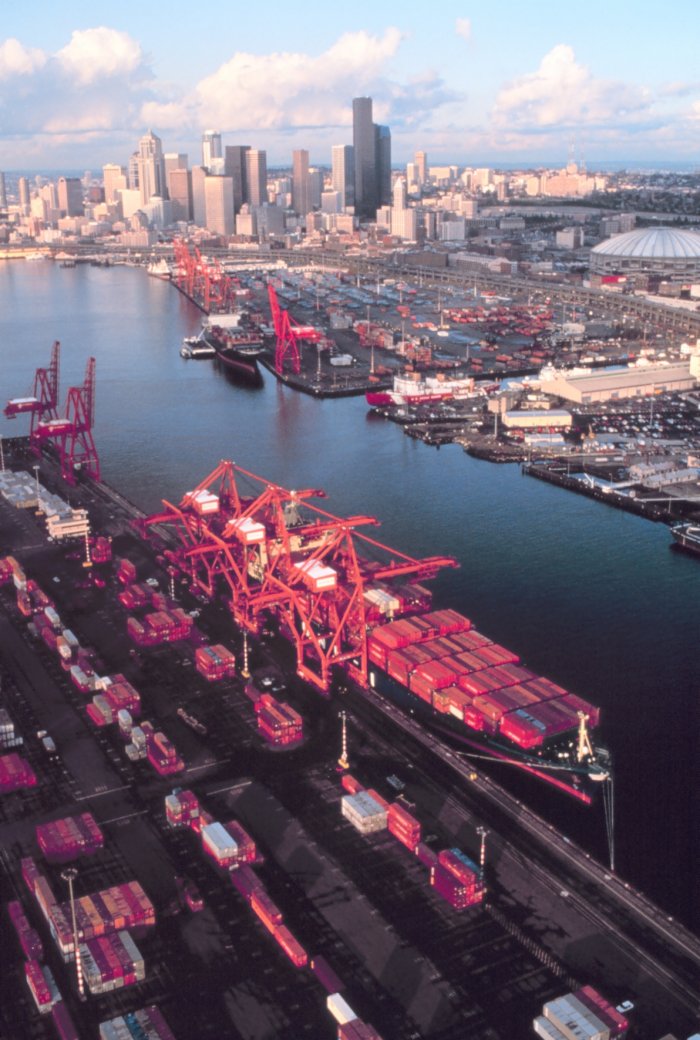
Seattle,WASH,USA -The Journal of Commerce Online, by Bill Mongelluzzo -Jul 3, 2010: -- Port scraps 200th older truck as part of effort to clean air around Northwest ports... The Port of Seattle’s program to get rid of older trucks reached its 200th scrapped vehicle this month, the port said... Seattle launched the program in November 2009 with the goal of removing at least 250 old trucks – those with pre-1994 engines – from service. It’s one of the many programs ports around the country are using to clean the environment around port facilities in response to local pressure and tougher regulations... In Seattle, truckers receive either the Blue Book value of the old truck, or $5,000, whichever is greater, for scrapping the vehicle. Many truckers use the money to purchase newer, cleaner vehicles... The program so far has spent $910,000 to take pre-1994 trucks off of the road... (Photo from shannonehlers: A grain handling pier in Seattle's port)

Labels:

Jun 17, 2010

CLEAN PORTS * USA - Long Beach Pollution Drops 52 Percent in Five Years

Clean Air Action Plan helps decline in pollution to outpace drop in trade

Long Beach,CAL,USA -The Journal of Commerce OnlineBill Mongelluzzo -Jun 15, 2010: -- Pollution from port activities in Long Beach dropped as much as 52 percent in 2009 compared to 2005, according to the port’s latest inventory of pollutants such as diesel particulate matter, nitrogen oxides and sulfur oxides... Diesel PM emissions declined 52 percent compared to 2005, NOx emissions were down 35 percent and SOx emissions dropped 46 percent compared to 2005 levels... Port executives attributed the decline in harmful emissions to the Clean Air Action Plan developed jointly by the ports of Long Beach and Los Angeles in 2006. The plan calls for a 45 percent reduction over five years in total pollution from vessels, harbor craft, marine terminal operating equipment, trucks and trains...


* New York - Cleaning Up Trucks and Jobs at the Port Authority

New York,NY,USA -The Huffington Post, by Amy Traub -June 17, 2010: -- By January 1st, 2011, the dirtiest of the diesel trucks spewing pollution on their way to and from the ports of New York and New Jersey may get a much-needed retirement. That's the Port Authority's goal for replacing more than 600 pre-1994 trucks that service area seaports with newer, cleaner models. The shift will cut regional air pollution, reducing emissions of diesel particulate matter from port trucking by more than 23 percent, according to Port Authority projections... Given that diesel truck pollution contributes to 1,159 premature deaths a year in New York and cost the state as much as $9.6 billion a year in medical costs and lost productivity, the effort to clean up dirty port trucking is welcome progress... To emulate -- and even surpass -- the best aspects of the Port of Los Angeles Clean Truck Program, the Port Authority of New York and New Jersey first needs clear authority from Congress to regulate port trucking. Then it should go beyond banning the dirtiest trucks to address the economics of an industry that generates not only bad air, but poor-quality jobs... (Photo: New York's one dock)

Labels:

Jun 5, 2010

CLEAN PORTS * USA - Los Angeles Reports Deep Pollution Reductions

Key diesel emissions measure falls 52 percent from clean trucks and other efforts


(Video from YouTube, by AcmeStudios —26 Dec 2009: HD short of the container ship MOL Emissary entering the Port of Los Angeles)

Los Angeles,CAL,USA -The Journal of Commerce Online, by Bill Mongelluzzo -Jun 4, 2010: -- The clean-trucks program and other pollution-reduction measures slashed harmful diesel emissions at Los Angeles last year, according to the port's 2009 air emissions inventory... Diesel particulate matter emissions declined 37 percent from 2008, nitrogen oxide (NOx) emissions fell 28 percent, and sulfur oxide emissions dropped 36 percent, the report said... The reduction in pollution was even more dramatic when compared to 2005. The 2009 DPM emissions declined 52 percent, NOx emissions were down 33 percent, and SOx emissions dropped 56 percent over the four-year period... The biggest declines in the 2009 inventory report can be attributed to the clean-trucks program, said Christopher Patton, the port’s acting assistant director of environmental management. More than 6,000 clean-diesel and LNG trucks have replaced old, polluting trucks in the harbor since the program started on Oct. 1, 2008...


* Clean Trucks Missing Minimum at LA Port. Subsidized vehicles fall short of requirement for port service

Los Angeles,CAL,USA -The Journal of Commerce Online, by Bill Mongelluzzo -May 24, 2010: -- Only 30 percent of the motor carriers that received subsidies from the Port of Los Angeles to purchase new trucks are on track to meet the port's minimum requirement for using the vehicles in port service... As part of the port's clean-truck program, drayage companies that purchased 2007-model or newer clean-diesel trucks, or trucks powered by clean alternative fuels, were given an incentive payment of $20,000 per vehicle... Since late 2008, some 100 motor carriers purchased 2,100 compliant trucks, costing the port $44 million in subsidy payments... In order to keep the incentive money, motor carriers must use each clean truck for a minimum of 300 trips to the Port of Los Angeles per year, or about one trip each working day... In a presentation to the harbor commission, John Holmes, director of operations, said only about 30 percent of the motor carriers receiving the $20,000 per-truck subsidy are on track to meet the 300-trip minimum... Harbor truckers unable to meet the requirement blame the 15 percent drop in cargo volume this past year as the main culprit. They add that since they also serve the neighboring Port of Long Beach, and those trips don't count toward the minimum requirement, Los Angeles should make adjustments to the program... On the other hand, some trucking companies accepting subsidy money made far fewer than 300 trips to the harbor, and almost 400 of the new trucks have yet to make a single trip to the marine terminals... (Photo A Freightliner truck)

Labels:

Apr 16, 2010

CLEAN PORTS * USA - The Most Effective Clean-Air Programs in the Nation

New Report on Port Trucking Details Imminent Threats to One of

Los Angeles,CAL,USA -PRNewswire -April 15, 2010: -- Environmentalists, Residents, and Port Workers Hail "From Clean to Clunker: The Economics of Emissions Control" by the Sierra Club, BlueGreen Alliance, LAANE, and the Teamsters... The new data reveals the cost of truck maintenance, coupled with the financial inability of individual drivers to meet this challenge, pose a profound environmental threat to clean-air gains initially achieved by the LA Clean Truck Program... The findings come a year after a deep-pocketed special interest, the American Trucking Associations (ATA), stalled full implementation of the green-growth program. The data also underscores the environmental risk for other U.S. ports being pressured by the Virginia-based industry group to put onerous and unreasonable costs onto the backs of individual drivers who earn $10-11/hr, rather than capitalized trucking companies that receive large public subsidies and incentives to acquire their fleets... Other findings include:

*
The average cost of maintaining a clean truck in its first 12 months of service is $2,200 and rapidly accelerates over time.


*
Adding typical wear-and-tear repairs to routine maintenance pushes out-of-pocket costs to port drivers in excess of $8,500 annually. Over the course of a standard 7-year lease the total cost can skyrocket to nearly $60,000.


*
These expenditures are over 70 percent higher than what drivers typically paid to maintain the old dirty diesel trucks they drove prior to the implementation of the Clean Truck Program.


One long-time port truck driver cited in the report explains his inability to pay for maintenance...
(Photo from cache1.asset-cache: Trucks are driven near the Ports of Long Beach and Los Angeles, the busiest port complex in the US, on September near Long Beach, California)


* USA - ATA Calls Teamsters Report An Attack on Owner-Operators

Arlington,VA,USA -Trucking Info, by Deborah Lockridge & Diana Britton -16 April 2010: -- A new report backed by the Teamsters Union and several environmental interest groups claims the cost of truck maintenance and the financial inability of drivers to maintain their vehicles poses a threat to the clean air goals of the Port of Los Angeles Clean Truck Program... "That salvo is not a research report, as the Teamsters claim, but just a collection of rhetoric that they have used before to attack owner-operator independent contractors," said Clayton Boyce, spokesman for the American Trucking Associations, in reaction to the report. "They falsely allege that owner-operators are not equipped intellectually or financially to properly maintain and service clean diesel engines. That's a huge insult to thousands of owner-operators"...

Labels: ,

Mar 10, 2010

CLEAN PORT PROGRAMS * USA

* California - Agency to Enforce Clean Air Goals

Los Angeles,CAL,USA -The Journal of Commerce Online, by Bill Mongelluzzo -Mar 8, 2010: -- Rules would toughen efforts, provide a backstop at Los Angeles, Long Beach ports. Southern California air quality regulators are proposing “backstop” rules to ensure the ports achieve the diesel emission goals established in their joint Clean Air Action Plan... The ports’ clean-truck programs that are part of the overall Clean Air Action Plan took effect in October 2008 and are already close to the goal of reducing diesel emissions from trucks by 80 percent. More than 6,000 trucks that meet federal Environmental Protection Agency standards for 2007-model heavy-duty vehicles are now in service... (Image from infrastructurist: Port of Los Angeles and Port of Long Beach)


* Washington - Seattle Program Scraps 100th 'Dirty' Truck


Seattle,WASH,USA -The Journal of Commerce Online, by Thomas L. Gallagher -Mar 8, 2010: -- Port of Seattle, partners help replace older models to reduce pollution. The Scrappage and Retrofits for Air in Puget Sound (ScRAPS) program, which the Port of Seattle and its partners launched four months ago, scrapped its 100th truck last week... The program started last November with the goal of taking pre-1994 drayage trucks off the road. Scrapping the 100th truck in just four months exceeds expectations. The success is partly due to incentives for truck owners. Through the program, truckers receive $5,000 or the blue book value of their truck, whichever is greater, in return for scrapping their old truck... ScRAPS grew out of the partnership between the Port of Seattle, Puget Sound Clean Air Agency, a regional agency chartered by the state, and Cascade Sierra Solutions, a non-profit organization dedicated to saving fuel and reducing emissions from heavy-duty diesel engines. The three organizations are working toward the goals of the Northwest Ports Clean Air Strategy, which aims to lower industrial port emissions... (Picture from wikimedia.org/wikipedia: Port of Seattle)


* New York / New Jersey - Port to Cut Emissions. Program to phase out older, dirtier trucks at port terminals


New York,NY.USA -The Journal of Commerce Online, by Joseph Bonney -Mar 9, 2010: -- The Port Authority of New York and New Jersey plans this week to release details of a clean-air program expected to phase out older, dirtier trucks at port terminals... The plan will not ban owner-operator container haulers as part of the effort, however, in contrast to efforts at the Port of Los Angeles... In addition to encouraging the replacement of older trucks, the program will include other measures to reduce port-related emissions of carbon dioxide, nitrous oxide and particulate matter... Under the financial incentive program, truck drivers are eligible for a 25 percent grant toward the total purchase price of a replacement truck and low-interest financing for up to 75 percent of the total purchase price of a replacement truck...(Picture from gordonterminal: Air view NY/NJ ports)

Labels: ,

Mar 4, 2010

Port Pollution * USA - A Silent Killer

"If we invest $100,000 in a new vehicle and we're making $2,000 a month or less, it doesn't make sense," said Mr. Prestol, who blames trucking deregulation for pulling down drivers' pay. "And what guarantee do you have after you buy a new truck that you'll continue to get work?"

New York,NY,USA -The Huffington Post John Petro -February 26, 2010: -- Many, if not most, of the products that we have in our homes first passed through one of the country's seaports. As gateways of global trade, our seaports give consumers access to a wide range of goods at a low cost. However, these gateways also create enormous amounts of pollution. And for those Americans that happen to live near a seaport, this pollution is a serious health hazard leading to negative health outcomes and even death... But Los Angeles is not the only city where port activities impact local residents... The Port Authority of New York and New Jersey currently has its own clean port program, but it isn't nearly as ambitious as it should be. The Port Authority currently has money available to replace 630 dirty trucks, but this is only about one quarter of the number of trucks that need to be replaced. Which is why the Port Authority should consider doing what Los Angeles has done: put a $70 fee on cargo containers that come into the port to fund the purchase of more clean trucks... And because port truck drivers in New Jersey cannot afford to purchase new, clean trucks, the Port Authority should place the burden of purchasing new trucks on the trucking companies... Port truck drivers in New Jersey make about $29,000 a year after expenses like fuel, insurance, tolls, and truck maintenance are taken into account... (Photo: PW/Marilyn Bechtel Trucks at the NY Port)

Labels: ,

Dec 10, 2009

CLEAN PORTS * USA - New Report Says Port Trucking Causing Public Health Crisis

Study claims “lax regulation in the national port trucking system has triggered a broad public health crisis” in North Jersey and Hudson County

Jersey City,NJ,USA -The Jersey City Independent, by Jon Whiten -Dec 9, 2009: ... The Coalition for Healthy Ports has released a report, “Hazardous to Our Health,” is based on a number of environmental and public health studies, and it reveals these alarming findings:

* Among counties, Hudson ranks Number 1 in the state when it comes to health risks associated with diesel soot — and Number 9 among counties nationwide.

*
Among states, New Jersey ranks Number 2 in the country when it comes to cancer risk associated with diesel soot.


*
Premature deaths attributed to diesel pollution in New York and New Jersey are predicted to reach more than 3,100 in 2010. That’s 5.5 times the number of homicides in the cities of Newark and New York City combined in 2008, and more than 2.5 times more than the murder rate across both states that same year.


*
North Jersey’s asthma rates are disproportionately high, with 1 out of 4 children suffering from the illness — compared to 1 out of 12 in areas further removed from the polluting ports.


So what now? The Port Authority of New York and New Jersey, which owns and operates the area ports, is moving forward with programs to replace the oldest trucks that service the ports as part of a broader clean air plan... And who pays? The companies want the truckers to pay, but the advocates argue that as independent contractors, the truckers cannot afford to do so... Advocates are pushing for the agency to essentially require that the companies invest in new trucks, as the Port of Los Angeles has done. But as a Port Authority spokesman told us this summer, the agency has “no intention of doing something similar here.” Instead, it is thus far relying on a combination of government grants and low-interest loans to create programs that help bring down the costs borne by the truckers who want new rigs...


* California - Smog rules will cost 1,000 truckers’ jobs at Oakland's port


San Francisco,CAL,USA -The San Francisco Business Times, by Eric Young -December 11, 2009: -- Oakland’s port will see a significant culling from its trucking ranks next month... An estimated 1,000 truckers — roughly one-third of the trucks that operate at the port — won’t be allowed to haul loads at the port starting Jan. 1 due to stepped-up clean air rules that ban older, more polluting rigs... The drivers of these trucks — most of whom are independent contractors — said that while they support clean air initiatives, they will be unemployed as a result of the rules. Some also used their predicament to highlight the need for drivers to become employees of trucking companies so that drivers don’t have to be responsible for costs of vehicle maintenance... (Photo by Spencer Brown - “As independent truckers, we carry all the responsibility,” says Lorenzo Fernandez)

Labels:

Oct 30, 2009

CLEAN PORT PROGRAM * USA - Cleaner-Trucks Mandate Will Create Hardships at Port of Oakland

The real problem is that the trucking system is broken. When Congress deregulated the trucking industry in 1980, it dismantled an industry dominated by large companies with union drivers. Independent truckers took their place

New York,NY,USA -The NY Times, by FRANCES DINKELSPIEL -October 30, 2009: -- Ablelom Zerfiel sat in the cab of his 1992 Freightliner, waiting in a long line to drop off his empty cargo container at the Port of Oakland. After driving for 12 years, Mr. Zerfiel is used to delays, low pay, grueling hours and the fickleness of the dispatch company that arranges his jobs... Life for Mr. Zerfiel and many of the other 1,300 independent truckers serving the Port of Oakland is about to get even harder. In an effort to reduce local air pollution, the port has mandated the use of cleaner trucks by Jan. 1. This makes it likely that Mr. Zerfiel, as well as hundreds of other drivers who cannot afford to buy new vehicles, will be out of work... The new regulations have created a clash between two ideals long held sacred in the Bay Area: the right to decent working conditions and a push for greener technologies... (Photo by Jim Wilson/The New York Times - Truckers at the Port of Oakland wait hours to load and unload cargo, releasing emissions into the air and nearby neighborhoods)

Labels:

Oct 1, 2009

CLEAN PORTS PROGRAM * USA - The Enemy Within?

Long Beach,CAL,USA -The Journal of Commerce, by John McLaurin (*) -September 30, 2009: -- The Port of Long Beach, one of the better-managed port facilities in the United States, operates in an extremely competitive environment... Unlike its competitors, however, the Port of Long Beach faces uncertainty and a new challenge from an unlikely direction the City of Long Beach... The Port of Long Beach transfers 10 percent of its net revenue to the City of Long Beach on an annual basis... Since 1990, the Port of Long Beach has invested over $790 million into the City of Long Beach... But the city has been devastated by the recession. Yet the city is willing to mortgage the port’s future and its position in an ever-increasing competitive environment. The City is considering this proposal at a time when all elements of the trade community (labor, agriculture exporters/importers, truckers, retailers, ocean carriers, marine terminal operators, and so on) are registering their opposition... It will be interesting to see how this all plays out. How ironic it would be if the greatest threat to the economic viability of the Port of Long Beach turns out not to be the vagaries of a global economy or competition from other ports but the City of Long Beach itself... (*) John McLaurin is president of the Pacific Merchant Shipping Association - (Photo from tfhrc.gov)


* Port Clean Truck Program: One Year Later

Los Angeles,CAL,USA -LBPost, by Keith Higginbotham -30 Sept 2009: ... The multi-billion dollar plan sought to replace the nearly 17,000 container hauling trucks servicing the ports with cleaner-burning models within five years (later studies found the real number was over 19,000 trucks)... The goal of the plan was to cut emissions from this fleet of privately-held diesel trucks up to 80 percent by 2012 ... Now, a year after kicking off the program the ports claim that nearly 5,000 of the still working trucks now meet the cleaner 2007-or-later model year emissions guidelines set by the ports under the Clean Truck program. These nearly 5,000 trucks, according to the ports, now account for more than half of all container moves at the ports... as residents of Long Beach, can all breathe a little better for the plan being in place.

* Did it cause the disaster in the transportation industry that opponents of the plan predicted? No.

* Did it run many workers out of the industry? Yes.

* Did the plan strengthen the lot of drivers servicing the ports like proponents claimed. No.

* Have emissions been reduced? Yes.


* Long Beach Beats Clean-Trucks Target

Long Beach,CAL,USA -The Journal of Commerce, by Bill Mongelluzzo -Sep 30, 2009: -- The Port of Long Beach will reduce truck pollution in the harbor by almost 80 percent by the end of the year, two years earlier than port executives anticipated when they launched the clean-trucks plan in the fall of 2008... Long Beach and neighboring Los Angeles introduced clean-trucks programs on Oct. 1, 2008, when they banned all pre-1989 trucks... The compliant trucks now move about 52 percent of all containers handled in the harbor, and cumulatively they are helping to reduce truck pollution by almost 80 percent. When the clean-trucks plans were developed, the ports expected to achieve the 80 percent reduction by Jan. 1, 2012... Also, about 5 percent of the harbor truck fleet is now powered by natural gas. The ports encourage the use of alternative fuels to reduce diesel pollution... (Photo from joc.com)

Labels:

Jul 22, 2009

New Study * USA - Shows Need For New Regulations For Clean Air, Worker Safety, And Economic Stability

Washington,DC,USA -Common Dreams -July 21, 2009: -- As the United States Congress considers the Surface Transportation Authorization Act of 2009, which aims to establish national regulatory reforms for American ground transportation, a newly published study details the widespread failures of port trucking deregulation. Port Trucking Down the Low Road: A Sad Story of Deregulation, published by Demos, a national public policy research center, chronicles the industry's downslide since the Federal Motor Carrier Act of 1980.

Key findings of the report include:

* Highway travel has become more hazardous since port trucking deregulation: 77.8 percent of New Jersey port truck drivers reported receiving an unsafe chassis in the last 12 months; on average, 40 percent of containers at Miami's port were overweight in 2006, and in some weeks that figure reached 70 percent.
* The port trucking system has not kept pace with advances in clean truck technologies, creating an increasing environmental crisis: Diesel emissions, especially from older trucks, cause significant harmful health impacts, releasing particles into the air that are carcinogenic and dangerous to the environment and the health of nearby residents.
* The quality of jobs for port truck drivers has decreased substantially: Drivers are on the job five days a week, from 10 to 12 hours a day, earning an average annual income of $28,000 in 2008. As "independent contractors", they do not receive health care or any contributions to a retirement fund and are responsible for all collateral maintenance, taxes, insurance and other costs.
* Deregulation has shifted significant costs to the public, costs previously shouldered by the shipping industry: Diesel emissions cause significant harmful health impacts, estimated by one study to cost the state of California $20 billion annually. More than 25 percent of New Jersey port drivers surveyed rely on public clinics or emergency rooms for health care.
* The goods movement system in the U.S. has become increasingly inefficient. Business logistics expenses for the port trucking industry increased for a fourth straight year in 2007, by $91 billion over the 2006 total. The system does not incentivize warehouse companies to build facilities closer to ports or distribution centers, and a poor communications infrastructure hinders incoming and outgoing container movement.
* The failure of the deregulated port trucking system has also been recognized by three separate North American port agencies that have taken some action to mitigate the problems caused by the Federal Motor Carrier Act of 1980.

Port Trucking Down the Low Road includes a series of reforms and policy recommendations, including:

* Improve quality of trucking jobs by cracking down on employer abuse of misclassifying port truck drivers as independent contractors in order to avoid compliance with employment laws;
* Improve air quality and reduce public health hazards and associated costs by establishing stricter federal diesel emission standards;
* Protect the driving public by enforcing highway safety standards, including weight restrictions and the new 2008 chassis standards for container trucks.

"As demonstrates, re-regulating the terms of port trucking could reverse the vicious circle. Raising standards and certifying only carriers that met them could turn the drivers back into regular employees and create incentives for carriers to modernize their equipment," said David Bensman, Professor of Labor Studies and Employer Relations at Rutgers University... And Bensman added that "as Congress and the Obama Administration debate the timing and contours of updating our nation's laws and policies governing goods movement, this new study identifies key areas in desperate need of regulatory reform to ensure we create a modern, efficient, sustainable, and equitable freight transportation system for the 21st century"... (Picture from media-cdn.tripadvisor, by B&B Nahuel, Ushuaia, Argentine: View down the street)

Labels:

Jun 14, 2009

CLEAN PORTS * USA - LA/LB Scramble to Improve Reputation

Ports plan changes as volume falls because of attitude, high-costs

Los Angeles,CAL,USA -The Journal of Commerce Online, by Bill Mongelluzzo -Jun 12, 2009: -- The ports of Los Angeles and Long Beach are working overtime to change their reputation among cargo interests as being the nation’s high-cost, business-adverse gateway for trade with Asia... Los Angeles has experienced its ninth straight month of cargo declines. Long Beach’s container volume is down 28 percent year-to-date. The Southern California port complex has experienced almost a 5 percent loss of market share since 2006... While cargo volumes at many U.S. ports are also down about 20 percent this year, the Southern California port complex has lost additional cargo because of resistance by shippers to the ports’ fees, reputation for undependable labor and an unfriendly business attitude both at the port and the state government... The ports admit their failings and are moving aggressively to address these problems... Both ports have announced reductions in port charges to attract more intermodal cargo, and Los Angeles will announce soon a one-year waiver of charges on cargo transferred from one port to another... The unpopular clean-trucks fee initiated in February may become a thing of the past in short course. Lytle noted that pre-1994 trucks and non-retrofitted pre-2004 trucks will be banned on Jan. 1, 2010. That will leave only about 500 of the more than 9,000 trucks that call regularly at the port complex subject to the $35 per-TEU fee... (Photo from ens-newswire.com: trucks at Long Beach Port)


* Long Beach Eyes Canada’s Subsidies - Rail supports may put U.S. ports at competitive disadvantage

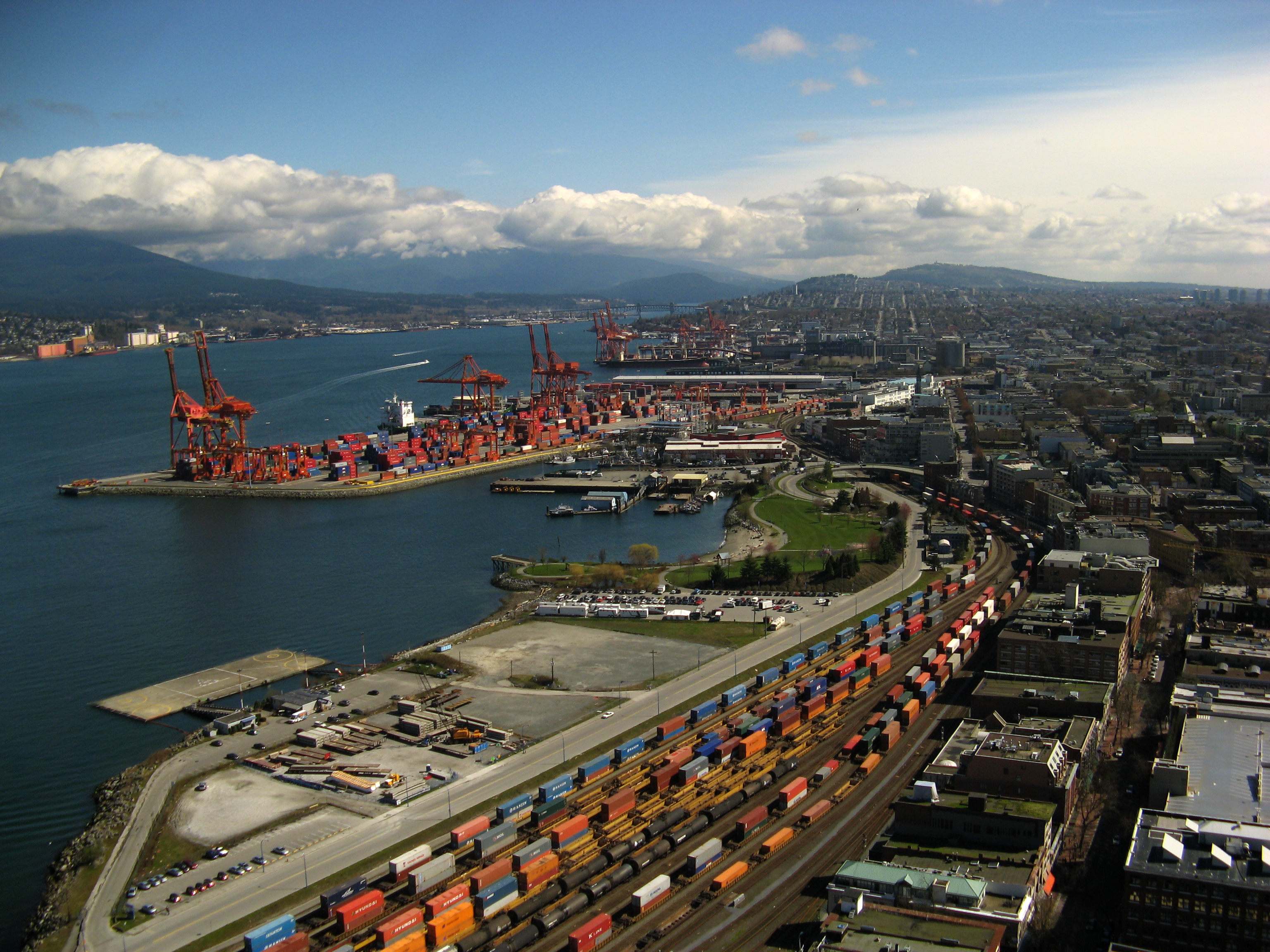
Long Beach,CAL,USA -The Journal of Commerce Online, by Peter T. Leach -Jun 11, 2009: -- The Port of Long Beach is concerned that it faces unfair competition from British Columbia’s Port of Prince Rupert because of Canadian government subsidies... U.S. ports on the West Coast may be at a competitive disadvantage with Canadian ports because of Canadian government subsidies to the Canadian railroads that serve those ports, said James C. Hankla, president of the Long Beach Harbor Commission... The port is looking into the possibility that the ports of Prince Rupert and Vancouver are getting an unfair advantage over U.S. ports under Canada’s Asia-Gateway Pacific Corridor program... Long Beach port executives shared their concerns with the DOT in a meeting with Deputy Assistant Secretary of Transportation Joel Szabot... (Photo from wikimedia.org/wikipedia: Vancouver, Island, and Prince Rupert ports)


* Long Beach Denies Dispute With Canada - No complaints filed, or planned, about port subsidies

Long Beach,CAL,USA -The Journal of Commerce Online, by Courtney Tower -Jun 12, 2009: -- The sound today at the Port of Long Beach, and among angry Canadian ports, is the sound of wind rushing out of the sails of a dispute over alleged port subsidies... Long Beach, the second-busiest port in the U.S., whose container traffic has dropped markedly over recent months, did not make a complaint about Canada to the Office of the U.S. Trade Representative, as news media reported, and is not even thinking of it...

Labels:

Jun 6, 2009

CLEAN PORTS * USA - Long Beach port seeks tech ideas

Aiming to develop a plan for a pollution-free cargo-moving system

Long Beach,CAL,USA -eTrucker -5 June 2009: -- The Port of Long Beach is calling for technology ideas to one day replace the diesel trucks that travel between port marine terminals and a local rail yard... The port officially issued a "Request for Concepts and Solutions," yesterday, June 3, outlining the goals and requirements of the project, known as the zero-emissions container mover system... The ports of Long Beach and Los Angeles and the Alameda Corridor Transportation Authority (ACTA) are seeking new technology to move containers between docks and the Intermodal Container Transfer Facility near west Long Beach, potentially eliminating thousands of short-haul diesel truck trips each day and reducing air pollution. Proposed technologies might include electric guideways, zero-emissions trucks or electrified rail, all of which use electricity to power the movement of cargo, rather than diesel-fueled trucks... (Image: The Alameda Corridor Transit Authority Corridor logo)

Labels:

Apr 23, 2009

CLEAN PORTS PROGRAM * USA - LA/LB Programs Drive Shippers to Other Ports

PortCheck, PierPass compliance seen as cumbersome

LA/LB,CAL,USA -The Journal of Commerce, by Bill Mongelluzzo -Apr 22, 2009: -- Complying with the PortCheck and PierPass programs in Los Angeles-Long Beach is a cumbersome task that is motivating shippers and freight intermediaries to look to other gateways for their discretionary cargo... While most transportation companies support the goal of the ports' clean truck program, which is to expeditiously retire old, polluting trucks from the harbor, complying with the PortCheck mechanism is costly and burdensome for cargo interests... Lisa Waller, vice president-import at BDG International in Chicago, told at the annual conference of the National Customs Brokers & Forwarders Association of America that dozens of her containers are drayed from the harbor to rail transfer yards by trucks that comply with the ports' strict emission standards... Nevertheless, Waller has to "claim" the shipments via PortCheck and pay a $35 per-TEU fee. However, since clean trucks are used, PortCheck refunds the payment about 30 days later... Waller said the process costs her company thousands of dollars in employee wages, wasted time and reduced cash flow, all because PortCheck is not equipped to simply waive the fee for intermodal shipments that are trucked to a rail yard... She is so upset that she is checking out Vancouver, Canada, as an alternate gateway. Vancouver does not charge clean-truck fees, and there is no harbor maintenance fee in Canada as there is at U.S. ports. "We can save $85 a container," Waller said... (Photo: logisticscareers - The Port of Long Beach )

Labels:

Jan 23, 2009

CLEAN PORTS * USA - An overhaul of New York’s port rules would bring vital jobs to the state


New York,NY,USA -The New York Daily News, by Jerrold Nadler& Andrea Batista Schlesinger -January 22, 2009: -- With President Obama's administration urging Congress to pass an economic stimulus quickly, local leaders should waste no time pointing to a smart, stable source of middle-class jobs: port trucking in New York's regional economy. If we reverse years of dangerous deregulation, thousands of new low-paying jobs could quickly become sustainable middle-class jobs... According to a new study by the Rutgers University School of Management and Labor Relations... That deregulation enabled bosses to dispatch cargo through so-called independent contractors. Treating these drivers as small businessmen rather than employees has prohibited the drivers from joining unions - and essentially enabled the companies to cheat on payroll taxes... A majority of these port truckers are recent immigrants with no negotiating power or workplace rights. Their lives are dictated by ocean shipping lines and trucking companies trying to get maximum productivity at minimal expense. These drivers have to pay for their own truck maintenance, fuel, road taxes, tire insurance and tolls. They are covered neither by workers' compensation nor by any labor legislation that protects fair wages, hours, occupational safety or health... They're not the only victims of the system. The Rutgers study reveals how the structure of the trucking industry passes off huge labor and environmental costs to the rest of us. Ordinary citizens are paying for the environmental effects of diesel emissions, for the health care of drivers and their families who can't afford insurance and for the congestion on freight routes that often run through residential neighborhoods... Port truck drivers operating with such low profit margins are most likely to use the least expensive trucks available, older and far more polluting than newer, cleaner trucks. The cheapest trucks emit the most dangerous fumes in neighborhoods closest to the ports, making the air increasingly toxic and causing severe spikes in asthma rates... The Port Authority, along with Gov. Paterson and Mayor Bloomberg, should push for new regulations that would require the trucking industry to absorb the total labor and environmental costs of doing business in our region... (Video from YouTube, by travelfilmarchive -May 28, 2008: "Influence of Geography & History on Port of New York 1949" - An educational film about the Port of New York and how it was formed Footage from this subject is available for licensing from www.globalimageworks.com)

Labels: