UBER's TECHNOLOGIES R & D * USA: Flying chargers -
* California - Uber's flying cars by the begining
(Video by WIRED - Oct 27, 2016) --- Forget self-driving cars,Uberhas a new one for you... flying cars.The company calls itUber Elevate and within a decade it’ll be a global network of on demand urban electric aircraft that take off and land vertically...
CARMAKERS TECHNOLOGY * Germany - For self-driving cars
* Frankfurt - German carmakers and technology firms form 5G telecoms association
--- German car makers Audi, BMW and Daimler on Tuesday launched an alliance with mobile telecoms network equipment firms Ericsson , Huawei, Intel, Nokia and Qualcomm to accelerate development of the infrastructure needed for self-driving cars... The pact is another example of Germany's premium carmakers collaborating to build technology expertise necessary to take on new rivals like Uber and Googlewhich are also working on autonomous driving technology... The new alliance, branded the 5G Automotive Association, will "develop, test and promote communications solutions, support standardization and accelerate commercial availability and global market penetration," the founders said in a statement...Last year BMW, Daimler and Volkswagen's Audi, joined forces to buy digital map maker HERE for 2.8 billion euros ($3.15 billion) from Nokia and this week will introduce a service that allows drivers to see for themselves what road conditions are like miles ahead using live data contributed by other vehicles... (Photo - Audi, BMW and Daimler alliance with Ericsson , Huawei, Intel , Nokia and Qualcomm, for 5G) -- Frankfurt, Germany - Reuters/KFGO, by Harro ten Wolde / Ilona Wissenbach / Greg Mahlich - September 27, 2016
FORD's * USA: Neuroscience to make driverless cars
* Michigan - Ford turns to neuroscience to make driverless cars
--- Ford Motor Co.could make its next autonomous car breakthrough with the help of a New York neuroscientist who’s attempting to restore sight to the blind... The automaker last month announced a licensing agreement with Nirenberg Neuroscience to help it bring a fully autonomous car to market in 2021.The New York company was founded by Dr. Sheila Nirenberg, who four years ago cracked the code to how the brain receives and processes visual images through electrical impulses... Humans view images — whether it’s a baby’s face or the words on this page — through photoreceptors in the retina that convert light into a form of code, which is then sent to output cells that transmit that code through specific electrical impulses to the brain. In certain degenerative eye diseases, the photoreceptors in the retina die but the output cells remain. Nirenberg found a way to send signals to the output cells through a device that acts as an artificial photoreceptor...While she never engineered cars before, she has been developing a computer-vision platform based on this code. In the last few months she’s worked exclusively with Ford to direct it toward car applications. Ford hopes her findings can allow its vehicles to see and understand the road ahead by working with a wide range of cameras, radar and LiDAR (light detection and ranging) sensors... (Photo by Tina Fineberg / AP for The Detroit News: Dr. Sheila Nirenberg poses for a photograph in her lab in New York Thursday Sept. 1. The device in front of her is a prototype that demonstrates the coding process) -- Dearborn, MICH, USA - The Detroit News, by Michael Martinez - September 7, 2016
VOLKSWAGEN + Anhui Automobile = A joint venture to make electric cars in China
* Shanghai - Volkswagen in talks to make electric cars in China
--- Volkswagen AG is exploring a joint venture to make electric cars in China with a state-run company, part of its aggressive push into electric-vehicle production as the auto maker works to resolve its emissions cheating scandal... The German car maker signed a memorandum of cooperation with China Anhui Jianghuai Automobile Co. for a potential partnership, the companies said in separate statements. Jianghuai said the two will be equal owners of the joint venture, and hope to reach a formal agreement within five months... The company is targeting sales of a million electric vehicles a year world-wide by 2025... Volkswagen, which derives more than a third of its global vehicle sales from China after three decades of operations there, currently has two car-making partners in the country: SAIC Motor Corp. in Shanghai and FAW Group Corp. in the northeast. Under government rules, foreign car makers must tie up with local partners to produce cars...
(Photo: VW e-Up electric car) -- Shanghai, SH, China - The WSJ (USA) - Sept. 7, 2016
The Autonomous Report * Canada - A glue against pedestrian injury
* Ontario - Self-driving trucks, increased congestion and preventing pedestrian injury with glue
-- The hype around autonomous vehicles continues, with a number of stories hitting the streets in the last week. A new company is working on a self-driving transport truck, some transportation experts believe self-driving cars will actually increase traffic congestion and Google has filed a patent for an adhesive to help prevent pedestrian injuries.
A study last year by the International Transport Forum seemed to indicate that total vehicle miles tranveled would increase anywhere from 30 to 90 percent after the introduction of AVs, assuming that half of travel is still carried out by conventional cars. * Googlehas apparently filed a patent for an adhesive device to use on cars to “protect pedestrians from self-driving cars,” according to a report in the tech media this week. “In its patent, Google acknowledged that robot cars will hit pedestrians -- until the technology gets to the point that the vehicles can 'avoid all accidents'” ... Google has come up with an adhesive that would be applied over cars that would keep humans hit by a braking car from bouncing off on to the pavement, which is when injuries often occur. According to the story an, “eggshell-like layer covering the adhesive would protect the sticky surface during everyday driving, but shatter in an accident to reveal the glue” ...The patent application also includes “an option to use a 'releasable adhesive' that would allow the person to be unstuck 'after a period of time'" ... (Image: Part of Google's new patent for an adhesive that could be applied to the company's robot cars. The adhesive would be protected by a thin shell that would shatter on impact and allow the adhesive to hold the pedestrian in place to prevent further injury) -- Toronto, ONT, CAN - Collision Repair Mag, by Jeff Sanford - May 20, 2016
TECHNO CARS * USA: Automatic brakes standard by 2022
* California - 99 % Auto makers set to adopt advanced technology
-- Auto makers representing 99% of U.S. light-vehicle sales will pledge to car-safety regulators and the nonprofitInsurance Institute for Highway Safety on Thursday that the technology will be on nearly all their cars and trucks by September 2022, the people said... General Motors Co., Ford Motor Co., Fiat Chrysler Automobiles NV, Toyota Motor Corp., Honda Motor Co. and Volkswagen AG are among the car makers making the pledge, one of the people said. Others doing so include luxury car manufacturers BMW AG, Daimler AG’s Mercedes-Benz and Volkswagen’s Audi, this person said... The pledge, expected to be unveiled at a news conference Thursday in McLean, Va., with auto makers, the National Highway Traffic Safety Administration and insurance institute, follows an initial promise from some car companies in September to eventually make the braking technology standard... Automatic emergency-braking systems use vehicle sensors including cameras, radars and lasers to detect imminent crashes. The systems then warn motorists before engaging brakes automatically if the driver doesn’t react quickly enough... Regulators have been pushing car makers to put the technology on more vehicles to help cut down on traffic fatalities. Other automated technologies popping up on vehicles include lane-departure warnings, collision warnings and systems designed to steer cars back when they veer out of lanes on roadways... The technologies are harbingers of fully driverless cars... (PHOTO: FREDERIC J. BROWN/AGENCE FRANCE-PRESSE/GETTY IMAGES - A 2016 Honda Civic on display at the Los Angeles Auto Show in November. Honda is among auto makers expected to make a pledge on automatic emergency-braking systems) -- Los Angeles, CAL, USA - The WSJ, by MIKE SPECTOR - March 16, 2016
NEW CAR TECHNOLOGIES * UK - JLR gets inside your head to cut crashes
* England - The new Mind Sense project hopes to harness driver brainwaves to predict if a driver is distracted or sleepy on the road
(Image: - MIND SENSE TECH: JLR's latest safety project is aimed at predicting whether drivers are distracted behind the wheel) -- Jaguar Land Rover (JLR)has revealed a range of road-safety research projects that are intended to reduce crashes caused by distracted drivers... JLR’s ‘Sixth Sense’ projectsuses advanced technology from sports, medicine and aerospace to monitor a driver’s pulse, respiration and brain activity to identify stress, fatigue and lack of concentration...ItsUK-based teamis also looking at innovations to reduce the time a driver’s eyes are off the road and how to communicate a problem back to the driver with pulses and vibrations through the accelerator pedal...JLR director of research and technology Dr Wolfgang Epple said:“One key piece of research is to see how we can measure brainwaves to monitor alertness and concentration” ...The Mind Sense technology research tests whether a car could effectively read brainwaves that indicate a driver is beginning to, the automaker says, “daydream or feel sleepy”... The human brain continuously generates four or more distinct brainwaves at different frequencies. By monitoring which type of brainwave is dominant a computer could assess whether a driver is focused, daydreaming, sleepy, or distracted... The most common way to monitor brainwaves is to have sensors attached to a headband, something that would be impractical in a vehicle. JLR is investigating a method used by NASAto develop a pilot’s concentration and bythe USAbobsleigh team to enhance concentration and focus... The automaker is conducting trials to collect more information on the different brainwaves identified through steering wheel sensors and leading neuroscientists to verify the results... Another project being tested is whether a vehicle can monitor the well-being of the driver using a medical-grade sensor in the seat of a Jaguar XJ. The sensor, originally developed for use in hospitals, has been adapted for car use and detects vibrations from the driver’s heartbeat and breathing... Monitoring the physical health of the driver would not only detect sudden and serious illness but also allow the car to monitor his stress levels... JLR hopes to reduce driver distraction by minimising the time the driver’s eyes are on the infotainment screen with a new system in testing – the predictive infotainment screen... The prototype uses cameras to track the driver’s hand movements and enables the system to predict which button the driver intends to select. This allows successful button selection to take place in mid-air, which means users wouldn’t have to touch the screen itself...The system could also use mid-air touch to provide the driver with a sensation, otherwise known as haptic feedback, that their button selection has been successful. The sensations could include a ‘tap’ on your finger or a ‘tingling’ on your fingertips...Haptics could also be used to communicate with the driver through the accelerator pedal to increase the speed of response and to ensure the correct action is taken... To create these sensations in the accelerator pedal, an actuator is fitted to the pedal and allows for vibrations or pulses to be passed through the foot of the driver. The technology also uses a torque motor, which can create resistance in the pedal feel... This resistance could be used to notify the driver that they are pushing the accelerator through a speed limit. Alternatively, if you were crawling along in traffic a timely warning through the accelerator could prevent you bumping into the car in front... (Video from Land Rover - Jun 9, 2015: Land Rover is researching a new type of technology that will allow cars to identify potholes while drivin. The technology will report the details of the pothole, including precise location and severity, back to the connected car technology system in order to alert fellow drivers, as well as local authorities in order to help them prioritise their repairs) (Images: Motopress) -- London, EN, UK - Wheels 24 (New Zealand) - 19 June 2015
* Aichi - Toyota details its triple-motor, super capacitor-powered Yaris Hybrid-R
(Photo: Independent 60-hp motors power each rear wheel) Toyota City,Aichi Prefecture,Japan -Gizmag, by C.C. Weiss -August 27, 2013:--Toyota has revealed the full powertrain details of the Yaris Hybrid-R conceptthat it teased a few weeks ago. The intriguing concept uses a 420-hp 4WD driveline that's derived from racing. In an interesting twist, Toyotauses a combination of super capacitor and motor-generator, in place of the battery pack that typically powers the motors in contemporary hybrids... Toyota says that the super capacitor has a higher power density than an NiMH hybrid battery, along with faster charge/discharge speeds. This makes it suitable for the fast bursts of boosting power needed, both in the TS030 Hybrid race car and in the Yaris Hybrid-R, which Toyota envisions as a track-focused hot hatch. The super capacitor is charged via regenerative braking provided by the dual rear electric motors... Each 60-hp motor is mounted at a rear wheel. These aren't electric mode, fuel economy-boosting supplements, but performance-enhancing boosters designed to quicken acceleration. In this capacity, they assist the 300-hp 1.6-liter four-cylinder turbo "Global Race Engine". That engine is mounted up front and works through a 6-speed sequential gearbox...
* Tokyo - Honda testing vehicle-to-vehicle communications to eliminate SMIDSY accidents
(Photo: Honda's DSRC safety system warns the driver their path is about to intersect with a motorcycle) Minato,Tokyo,Japan -Gizmag, by Loz Blain -September 3, 2013:--Hondais looking into the idea of using Dedicated Short-Range Communications (DSRC) to give drivers advance warning when aSMIDSY (It stands for "sorry mate, I didn't see you"), situation could be coming up...DSRC is a short-range wireless communication protocol designed specifically to let vehicles communicate with stationary objects like toll booths, traffic signals and railway crossings, as well as with other vehicles. It's likely to be the means by which adaptive cruise control evolves to the next level, among a raft of other uses... Honda is working with the University of Michigan to develop a DSRC early warning system that can flash a "motorcycle approaching" warning and a series of beeps when a driver seems to be about to pull out in front of an approaching bike that's got a DSRC device installed...
* Belgium -P-MOB electric car travels 20 km on solar power alone
(Image: The P-MOB prototype electric car) Brussels,Belgium -Gizmag, by Ben Coxworth - August 13, 2013:-- One of the criticisms made about electric vehicles is that they’re only as “green” as the source of the electricity used to charge their batteries.A Tesla Model S may not emit any carbon, for instance, but the coal-burning power plant that allows it to recharge certainly does.In order to be truly carbon-neutral, EVs need to be able to run completely on electricity derived from clean sources.Well, that’s just what the P-MOB prototype cardoes ... as long as you don’t need to take it too far...Of course, any electric vehicle can run on cleanly-generated electricity if enough of it is available. The difference with the P-MOB car is that it’s able to charge its battery up to a “practical” level using its integrated solar cells alone – albeit for a modest range, in sunny southern Europe...
The tiny two-seater weighs less than 600 kg (1,323 lb) without its battery pack, utilizes a kinetic energy recovery system when braking, and is reportedly 30 percent more aerodynamic than other vehicles of the same dimensions. It has two motors and two differentials – one assigned to each axle – essentially giving it 4-wheel drive. This provides it with improved control in curves, better traction control, plus it allows each motor to operate at peak efficiency as dictated by driving conditions.It has a maximum speed of 100 km/h (62 mph)...
* Massachusetts - Terrafugia announces its plans for a VTOL "flying car"
(Image: Terrafugia - Terrafugia has announced its plans to develop a vertical-take-off-and-landing flying car, known as the TF-X) Woburn,MASS,USA -Gizmag, by Ben Coxworth -May 6, 2013:...Terrafugia is one of the groups currently trying to change that situation – a fully-functioning prototype of itsTransition fixed-wing “roadable airplane”is currently undergoing flight tests, and was recently cleared for civilian use by the US Federal Aviation Authority.It still requires a runway for take-off and landing, though, which kind of clashes with many peoples’ flying car fantasies... Today Terrafugia announced its plans for a hybrid-drive vertical-take-off-and-landing (VTOL) vehicle, known as the TF-X, featuring wings that fold into its sides, allowing it to fit on roads and in garages when in fully-electric ground mode... Once the TF-X has gained enough forward momentum, the two wing-mounted propellers (but not the wings!) can once again be retracted, with a 300-hp internal combustion engine powering a single large rear-mounted ducted prop while cruising. The wing props will be re-engaged as the landing site approaches...
"The best driver's car in the world," on road and track - * UK
* England - McLaren P1 heats up the Arctic Circle
(Video from YouTube, by McLarenAutomotiveTV -"The McLaren P1™: tested to extremes": With only a few months remaining until the first deliveries will be made to just 375 customers, the development programme for the McLaren P1™ continues to accelerate as it nears its end. This extensive work is being carried out to ensure that the McLaren P1™ delivers on the target of being 'the best driver's car in the world on road and track'...or a frozen lake, for that matter) Woking,Surrey,EN,UK -Gizmag, by C.C. Weiss -May 1, 2013:-- You don't create one of the utmost masterpieces of the high-performance supercar market without countless hours of testing. Much of that testing is dirty, sweaty and anything but sexy, but a few select aspects are riveting enough to make for edge-of-your-seat video – aspects likethe McLaren P1 drifting through snow-powdered ice in northern Sweden...The specific reason behind McLaren's traveling acrossthe North Sea was "durability and development testing" under extreme conditions, something that sounds much more compelling when set to the soundtrack of a motor-assisted 727-bhp V8 engine and screechingPirellis. McLaren brought the car inside the borders of the area we know as the Arctic Circle for the testing...McLaren showed aP1 design studyat the Paris Motor Show last September and provided details about the 903-bhp hybrid powertrain and other mechanicals prior tothe 2013 Geneva Motor Show...Moving forward, McLarenis certain to cite the 217 mph (349 km/h) top speed, sub-3-second 0-62 mph (0-100 km/h) and sub-7-second 0-124 mph (0-200 km/h) in trying to convince 375 buyers that US$1.15 million is a small price to pay for this particular piece of motoring history...
* Belgium - Ford's eWheelDrive has designs on the urban car of the future
(Image: Cutaway view of the eWheelDrive hub motor) Lommel,Belgium -Gizmag, by David Szondy -May 1, 2013:-- It's predicted that by the year 2050 there will be 9.3 billion people on Earth and 6.4 billion of them will be living in cities. There could also be four times as many cars on the roads as today, leading to an incredible degree of urban congestion and gridlock. That’s the impetus behind Fordand technology partnerSchaeffler’s eWheelDrive electric research car, that moves the motor to the wheel hubs...The eWheelDriveis under development byFord and project leader Schaeffler, a German automotive component manufacturer and supplier. The aim of the project is to investigate the potential for smaller, more agile cars better suited to crowded urban environments...The eWheelDrive doesn't look very revolutionary.It’s based on that most conventional of cars,the Ford Fiesta, but the real secret isn’t under the bonnet because there’s nothing there except the battery.Instead, the engine has given way to two electric motors mounted in the hubs of the rear wheels along with the braking and cooling systems...
This setup also isn’t entirely new, but what is new is the fact that the eWheelDrive is not intended to make it more sporty or just greener, but as a way of developing car technologies for increasingly crowded city streets. The design frees up space under the bonnet that is normally occupied by a conventional engine or a central electric motor, opening the door for smaller, more agile cars ...
* Germany - Compact laser system scans road surfaces at 100 km/h
(Photo: Cars and lasers, together again) Munich,Germany -Gizmag, by James Holloway -May 1, 2013:-- Researchers at the Fraunhofer Institute for Physical Measurement Techniques have come up with a car-mounted laser scanner the size of a shoe box, that can survey the contours of road surfaces at speeds of up to 100 km/h (62 mph). The system detects potholes and other road damage in need of repair.According tothe Institute, the Pavement Profile Scanner (or PPS) has surveyed 15,000 km of road since mid-2012, in which time it has proven cheaper, faster and more accurate than existing systems which require hefty attachments to the carrier vehicle.
An octagonal mirror housing scatters the laser light across the width of the road. With a 70º acquisition angle, the system can scan roads up to 4 m (13 ft) wide. By recording the time it takes for the laser to return to the scanner from the road surface, the distance at any point can be calculated; to an accuracy between 0.15 and 0.3 mm in the case of PPS. The only other information needed is the vehicle's position and orientation as a reference for each datapoint. It's LIDAR, basically...
* USA - WORLD RECORD: Car engine testing to 1700 hp / about 275 mph (442.5 km/h)
* Washington - SSC completes engine testing on Tuatara supercar, teases 1,700 hp
(Image: The Tuatara at the 2011 Concours d'Elegance Pebble Beach) West Richlands,Benton,WASH,USA -Gizmag, by C.C. Weiss -April 29, 2013:-- Speak of the devil !!! ... The Tuatara's engine completed its final testing and validation earlier this month. SSC pushed the V8 to the limit in dyno testing in an effort to identify any weaknesses.It then rubbered the proverbial "approved" stamp onto the 1,350 horsepower and 1,280 lb-ft (1735 Nm) ratings.The horsepower is just a confirmation of what SSC announced when it first introduced the Tuatara, but the torque takes quite a spike from the 1,042 lb-ft (1413 Nm) still listed on the specs section of its website. And for those owners that "don't want or need to be buffered by regulations," the engine packs the untapped potential for a primal stampede of more than 1,700 horses... Despite all that raw power flirting with the driver's toes, and despitethe Tuatara's world record potential, SSC says that the car is gentle and civilized enough to be a daily driver – assuming anyone wants to drive his or her half-million-dollar supercar every day... While SSC materials talk a lot about 275 mph (442.5 km/h), its website lists the projected top speed at 276 mph (444 km/h). Either one will be enough to top the Bugatti Veyron Super Sportbut will also fall short of the rumored "Super-Veyron's"288 mph (463.5 km/h) potential.OtherTuataranumbers of interest include a 2.5-second 0-60 mph (96.5 km/h), 9.75-second quarter-mile (at 144 mph/232 km/h), 0-100-0 mph time (0-161-0 km/h) of 11.25 seconds, and 2,750-pound (1,247-kg) dry weight...SSC plansto deliver the first Tuatara by December of this year or January 2014...
* Sweden - Volvo confirms fuel savings of 25 percent with flywheel KERS
(Image: Volvo's Flywheel KERS) Goteborg,Sweden -Gizmag, by C.C. Weiss -April 26, 2013:-- After extensive testing of its kinetic flywheel technology,Volvo has announced that the system can boost fuel economy by 25 percent. The company is now looking at integrating the Flywheel KERS system into its production line... Volvo's Flywheel KERS is fitted to the rear axle. During deceleration, the braking action causes the flywheel to spin at up to 60,000 rpm.Meanwhile, the front-mounted engine shuts off. The energy stored in the spinning flywheel can then be applied via a special transmission toward acceleration or used to power the car once it reaches cruising speed... Volvo's experimental flywheel is a carbon fiber model that spins in a vacuum to minimize frictional losses. It weighs 13.2 pounds (6 kg) and measures about 8 inches (20 cm) in diameter... During road testing with a Volvo S60 flywheel test car, Volvo found that when partnered with a four-cylinder engine, the flywheel technology offers up to a 25 percent reduction in fuel consumption versus a comparably performing turbo six-cylinder. It says that the system can also augment the engine with an 80 hp boost, giving it acceleration comparable to a six-cylinder – 0-62 mph (100 km/h) in as quick as 5.5 seconds...
* South Caroline - Engineering students create Gen Y concept
(Photo by Larry Edsall / Special to The Detroit News: The hybrid concept car’s framework is made from folded aluminum with a gasoline engine in front and an electric powertrain in the rear) Greenville,SC,USA -The Detroit News, by Larry Edsall -April 18, 2013:-- A couple of years ago, Mazda offered a homework project to the graduate students at the Clemson University International Center for Automotive Research: Create a concept vehicle...What sort of vehicle? One those engineering students would want to buy after they graduated from Clemson and had jobs in the auto industry... The hope was that the students would create a vehicle that was technologically innovative and socially responsible, yet would be viable in the marketplace and practical to build in significant numbers, going on sale in a 2020 timeframe for $25,000-$30,000... But the most intriguing aspect of the car — at least for automotive engineers — is its structure. The car's framework is made not from stamped or tubular metal but from folded aluminum... Another of the sponsoring companies is called Industrial Origami, which has developed a technology for folding metal and attaching folded-metal sections with special rivets and adhesives. The idea is to eliminate long lead time and costs involved in creating dies and stamping presses while producing a chassis that is strong and light...
* Smack torque: Protean Electric launches new in-wheel drive system
(Photo: The system can be retrofitted to existing vehicle platforms or easily adapted to fit newer offerings) -Gizmag, by Angus MacKenzie -April 17, 2013:-- When it comes to hybrid drive-train innovations, the electric wheel motor has perhaps been under-appreciated.Protean Electric's new and improved electric wheel motor system might change that, thanks to the copious amounts of torque it affords...Unveiled at the 2013 Society of Automotive Engineers World Congress, Protean’s new production in-wheel motor is a designed to be paired with a gas engine as part of a hybrid system, as well as used in all-electric vehicles. Unlike traditional gas or hybrid drive-trains where power is transmitted via drive shafts that rely on various transmission and differential configurations, electric wheel motors have the ability to respond individually and instantaneously. Motors can produce power exactly when and where needed, as determined by an assortment of wheel sensors, performance settings, throttle inputs, transmission setup and road conditions...
Mercedes' new all-electric SLS is the latest example of how this technology can provide an array of driver modes, with variable inputs for power, wheel slip, wheel braking and traction capabilities...Protean’snew motors provide a 25-percent increase in peak torque compared with the company’s previous generation, as seen inthe EDAG concept vehicle... Residing in the space behind the wheel, each motor weighs in at only 31 kg (68 lb). The power gained by the addition of 124 kg (i.e. 4,000 lb.ft of torque overall) relative to the power-weight-ratio of a normal gas engine is indeed an argument of significant proportions. Not only are heaps and gobs of torque now available, but Protean also promises an increase in fuel economy of 30 percent, all dependent on battery size, driver input and driving conditions that determine an EV’s mileage. On the braking front, Protean’snew motors regenerative abilities are enhanced to the point where up to 85 percent of kinetic energy can now be recovered...
* California - ... An accidental discovery may be the key !
(Video from io9) Los Angeles,CAL,USA -Fleet Europe (Belgium), by Tim Harrup -25 March 2013:-- The greatest obstacle to the wider adoption of electric cars, apart from price, is the very limited driving range and the recharging time of several hours. An accidental discovery in America at the UCLA opens up the possibility of recharging an electric car – using a supercapacitor in place of a battery – in around one minute. Scientist Richard Kanerbelieves that using graphene, a carbon-based and recyclable material, this could one day be feasible. The production process for this material (a Nobel prize winning material) has been refined bythe UCLA team to make it possible on a large scale...
* Sweden - Swedish car manufacturer Volvo invents car that can brake, accelerate and steer itself in slow moving traffic Stockholm,Sweden -The Herald Sun, by Joshua Dowling -October 24, 2012:...Volvohas already developed a system that eliminates low-speed crashes - by automatically slamming the brakes if the driver is about to hit the car in front...Now it has taken the technology a step further so the car can accelerate gently and "follow" the vehicle in front, taking the hassle out of stop-start driving in peak hour... Some radar cruise control systems on top-end luxury cars have a similar stop-and-go feature – but are only active when the speed is set above 50km/h... Volvohas advanced the idea by making it work at speeds less than 50km/h... The technology will be ready in less than two years – but it’s likely to be delayed until legislation changes make it legal to use on Australian roads, where rules currently state that a driver "must be in control of a vehicle"...
* Japan - Nissan developing "fatigue-free" car seats
(Photo: Nissan is working on new car seats that are claimed to lessen discomfort and fa tigue) Nishi-ku,Yokohama,Japan -Gizmag, by Ben Coxworth -October 23, 2012: ... Engineers atNissan, they’ve designed a new type of seat that they claim requires less physical effort to use, thus lessening driver fatigue and discomfort... Nissanlooked at NASA studies, in which the human body was observed to take on a neutral posture when in a weightless environment – that is apparently the position that the body wants to adopt by default. By contrast, the automaker claims that conventional seats force us into an unnatural posture. As long as we’re sitting in that position, we have to exert certain muscles in order to compensate for it...
* France - Renault launch new driving programme
Paris,France -Irish Trucker -23 October 2012: -- Truck Fuel Eco Driving, the new application developed by Renault Trucks, enables anyone to practice eco-driving an HGV on their SmartPhone or tablet. This is a serious game for learning how to anticipate the characteristics of the road and reduce consumption without compromising efficiency... The Truck Fuel Eco Driving game developed by Renault Trucksand unveiled on video simulators at the IAA Motor Show in Hanoveris now available for SmartPhones and tablets. Based on the type of conditions truck drivers actually have to cope with on the road, this application puts the player behind the wheel of a Premium Long Distance pulling a 40 tonne load, with the objective of driving it as fast and as economically as possible... Ten missions, with 10 different levels of difficulty, take the player over routes in urban or periurban areas, on motorways or combinations of these environments. At the beginning of each mission, players are given a set of specific objectives. For example, they are asked to manage their consumption when going uphill and downhill or when negotiating city traffic...
* Michigan / USA - Vehicle-to-Infrastructure Technology, On The Road In Germany
Detroit,MICH,USA -The Car Connection, by Richard Read -Oct 24, 2012:-- Last week,Dykema released results from its2012 Automotive Institute Survey, which polled 100 auto executives about their thoughts on the industry's future. Among the most interesting findings was the fact that respondents seemed more interested in vehicle-to-infrastructure (V2I) technology -- that is, technology that allows cars to communicate with infrastructure elements, like stop lights -- rather than the vehicle-to-vehicle systems (V2V) that often litter the headlines... Wired has posted a new clip of such a V2I system at work in Germany.There, technicians equipped a BMWwith a transceiver that communicates with infrastructure elements and emergency vehicles... As the author points out, this V2I test program is different from many of the V2V systems we've seen. The latter are generally intended to improve driver safety. In fact,the Department of Transportation believes that V2V systems could bring America's already-low auto fatality rate much lower... V2I systems have safety implications, too -- for example, by alerting drivers to upcoming red lights. However,the German V2I test is currently focused on easing traffic flow and helping drivers save gas...
* California - Drive Toward Autonomous Cars Shouldn’t Be So Automatic, Critics Warn
(Photo: AAM survey shows still great distrust of “totally self-driving” vehicles) Los Angeles,CAL,USA -WardsAuto, by Erik Derr -Oct. 8, 2012:-- Liability and privacy issues are among concerns. If those aren’t addressed, “expect a bumpy road ahead,” says one auto industry group... The rush toward driverless cars by Golden State lawmakers needs to be tempered by the growing risks the technology poses to auto makers, a leading manufacturer group says...Hours after Gov. Jerry Brown signs a bill authorizing state regulations for autonomous vehicles by 2015, the Alliance of Automobile Manufacturers, whose members account for 77% of all car and light-truck sales in the U.S., warns of the need to go slow... The new legislation offers no protection to the maker of a vehicle that has been converted to an autonomous unit without the consent or even knowledge of the manufacturer, the trade organization argues... Vehicles currently are designed to be operated by people who are expected to maintain control and operate them safely, but SB 1298, the newly signed bill, “envisions autonomous vehicles where responsibility for safe operation rests on the autonomous system,” the group says... Citing Google’s widely criticized track record of protecting user privacy, John Simpson, privacy project supervisor for the nonprofit advocacy group Consumer Watchdog said, the new driverless law demonstrates safeguarding personal privacy is not “high on people’s priorities right now” ...
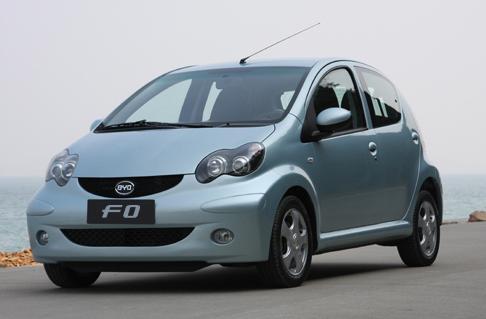
(Photo: BYD electric car) Shenzhen,Guangdong,China -Fleet Owner (USA); by Sean Kilcarr -Sep. 4, 2012: -- Ah, the remote controlled car!!! ... it’s now become something of a reality – from none other than a Chinese automaker!...That would beBYD, one of China’s biggest car manufacturing companies, which introduced what it claims to be the first remote-driving-enabled five-seat sedan late last week – theBYD “Su Rui”... The control vehicle's starting, stopping and steering remotely is accomplished via a hand-held unit no larger than a standard smart-key fob... In a range of 10 meters (roughly 30 feet), the driver can start the car, move it forward and back plus turn it both left and right – all at a restricted speed of 2 kilometers per hour, which equates to about 1.2 mph. The car’s climate control system can also be controlled via the remote device as well, BYD said...The car also comes equipped with Bosch’s ninth generation electronic stability technology, a tire pressure monitoring system, electronic parking brakes, blind spot visibility systems, color reversing video surveillance systems, remote control power windows, 13 types of intelligent voice guides and a 5.1 channel, 10 speaker system with independent power amplification for what BYD calls an “in-car cinema experience” like no other... BYD is selling its newSu Rui sedanequipped with the remote driving system with a starting price of 65,900 yuan – roughly $10,365 – for the base model equipped with a 1.5-liter gasoline engine...


![[Valid Atom 1.0]](valid-atom.png "Validate my Atom 1.0 feed")